
Masters Group
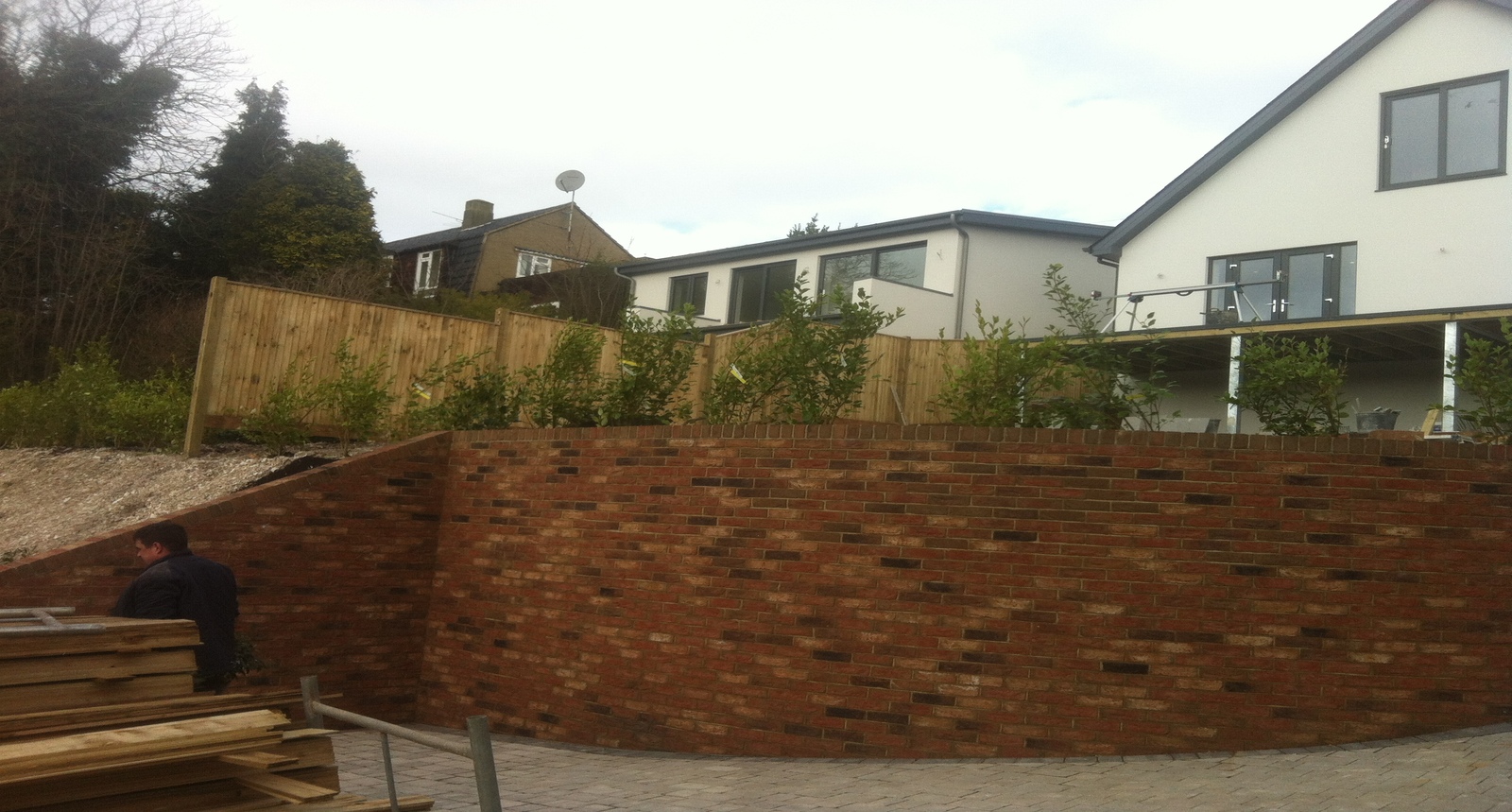
Structural Retaining Wall
Construction Specialists
in Brighton & East Sussex
Engineered retaining walls that hold ground, protect structures, and create usable levels on sloped sites — designed by structural engineers and built to withstand decades of lateral earth pressure.
30+ years experience · Engineered designs · Fully insured · LABC approved
30+ Years
Retaining wall experience
Structural Engineers
Every wall designed
Fully Insured
Comprehensive cover
Fixed-Price Quotes
No hidden costs
What Is a Retaining Wall and When Do You Need One?
A retaining wall is a structural element designed to hold back earth at different levels. They are essential on sloped sites, in garden terracing, adjacent to driveways, and wherever ground levels change significantly. Without proper retaining structures, soil pressure causes land slips, subsidence, and damage to adjacent buildings.
In Brighton and across the South Downs, sloped sites are extremely common. Many properties sit on hillsides where gardens, driveways, and building plots require engineered retaining walls to create usable level areas and protect existing structures from ground movement.
Retaining walls are also needed when excavating for basements, creating split-level gardens, building adjacent to boundaries where ground levels differ, and protecting foundations from lateral soil pressure during construction.
Masters Group designs and builds retaining walls in brick, block, reinforced concrete, and gabion construction — each selected based on the height to be retained, ground conditions, drainage requirements, and aesthetic preferences.
What Happens When Retaining Walls Fail?
Retaining wall failure is dramatic and dangerous. When a wall cannot resist the lateral pressure of the earth behind it, collapse can be sudden — tonnes of soil releasing in a landslide that destroys gardens, damages buildings, and can injure or kill.
The most common cause of failure is inadequate design. A garden wall and a retaining wall are fundamentally different structures — a retaining wall must resist continuous lateral earth pressure that increases with depth. Walls built without engineering calculations frequently fail when they reach their limit.
Poor drainage behind retaining walls is the second most common failure cause. Water trapped behind a retaining wall dramatically increases the pressure it must resist. A wall designed for dry soil conditions can fail catastrophically when saturated ground increases the effective load by 40–60%.
Rebuilding a failed retaining wall typically costs 2–3 times the original construction cost because it involves stabilising the collapsed ground, removing debris, and constructing a properly engineered replacement — often with restricted access due to the failure.
Our Process
How We Deliver Every Project
Site Survey
Assessment of ground levels, soil type, drainage conditions, and loading requirements. Measurement of height to be retained and identification of surcharge loads.
Structural Design
Structural engineer designs the wall specification including thickness, reinforcement, foundation, and drainage details.
Excavation & Foundations
Controlled excavation and construction of the retaining wall foundation — typically a reinforced concrete strip wider than the wall itself.
Wall Construction
Building the wall to design specification with proper drainage, weep holes, and waterproofing as required.
Backfill & Drainage
Placement of drainage aggregate behind the wall, installation of drainage pipe at the base, and controlled backfill in compacted layers.
Inspection & Completion
Building control inspection where required. Landscaping, capping, and finishing to agreed specification.
Why This Matters for Your Project
Engineered Stability
Every wall designed by structural engineers to resist calculated earth pressures — no guesswork, no risk of failure.
Creates Usable Space
Transform unusable slopes into level terraces for gardens, patios, driveways, and building platforms.
Protects Adjacent Structures
Properly designed retaining walls prevent soil movement that could undermine foundations of nearby buildings.
Integrated Drainage
Every retaining wall includes engineered drainage to prevent water build-up that causes failure.
Aesthetic Options
Brick, stone, render, or gabion finishes to complement your property's character and landscape design.
Long-Term Value
A properly built retaining wall lasts 50+ years with minimal maintenance — protecting your property and investment.
Retaining Walls: Materials, Design & Construction Methods
Gravity retaining walls rely on their own mass to resist earth pressure. They are suitable for retaining heights up to approximately 1.2 metres and are typically constructed from brick, block, or stone. Above this height, reinforced designs become necessary.
Reinforced concrete retaining walls use steel reinforcement to resist bending forces. The most common type is the cantilever wall, which has a base slab with a heel extending under the retained earth. The weight of earth on the heel contributes to the wall's stability. These are effective for heights of 1.5–6 metres.
Brick retaining walls in Brighton typically use engineering bricks (Class A or B) below ground and facing bricks above. Wall thickness varies from 215mm (single skin with reinforced concrete backing) to 440mm (double skin) depending on height and loading.
Drainage is critical in every retaining wall design. The standard approach includes: granular fill (20mm clean stone) behind the wall face to a minimum depth of 300mm, a perforated drainage pipe at the base of the granular fill, and weep holes at regular intervals through the wall face. Without this drainage, hydrostatic pressure can exceed the wall's design capacity.
Waterproofing the rear face of retaining walls prevents moisture penetration into the wall structure, extending its lifespan. Options include bituminous coatings, cavity drain membranes, and cementitious waterproofing systems.
Retaining wall costs in Brighton vary significantly based on height, material, and access. A 1-metre brick retaining wall typically costs £300–£500 per linear metre. A 2-metre reinforced concrete wall with brick facing costs £600–£1,200 per linear metre. Complex sites with access restrictions or proximity to existing structures increase costs further.
Frequently Asked Questions

Need a Retaining Wall Built Right?
Get a free, no-obligation estimate. Engineered design, proper drainage, and fixed-price delivery from survey to completion.